Skip to Main Content (Press Enter)
How can we help you?

Fleet industry news round up November

28th November 2025

Industry wrap-up

November delivered a wave of major updates for the fleet industry, one being release of the much-anticipated Autumn Budget setting the tone for the year ahead. In this month’s fleet news round-up, we highlight the key legislative and policy changes that will shape the sector outlined in the Autumn budget, new regulatory plans for zero-emission vans and upcoming adjustments to congestion charges. Lastly, as we approach the festive season, we remind you to be aware of the risks and penalties of drink driving  and provide guidance to keep you safe on the road.

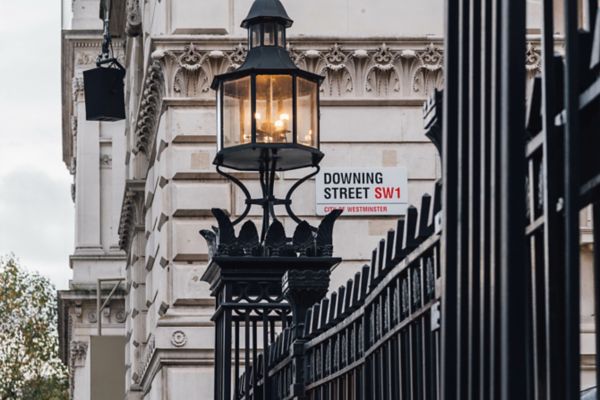
Chancellor Rachel Reeves, released Autumn Budget outlining the significant budget for fleets and motorists compared with previous years. The statement includes major policy changes such as taxation of electric vehicles (EVs) and action on Fuel Duty, which we have outlined below:

Electric Vehicles:

  • Reeves confirmed the introduction of the new tax on EVs, the Electric Vehicle Excise Duty (eVED).
  • EVs will also face new mileage based charges on top of existing Vehicle Excise Duty (VED) rates. This new tax will be introduced after a perod of consultation.
  • A 3 pence per mile (ppm) rate on battery electric cars and 1.5ppm for plug-in hybrid cars are to be imposed from April 2028. These rates will then increase annually in line with the Consumer Prices Index (CPI) measure of inflation.

Fuel Duty

  • Chancellor Reeves concfirmed that Fuel Duty will not increase in line with inflation in April 2026.
  • However, Reeves is working to undo the temporary 5p cut that was introduced back in March 2022. This cut will remain in place until August 2025, at which the rates will increase by 1p from September 1st 2026, 2p fom December 2026 and another 2p from March 2025.

Salary Sacrfice

  • Chancellor reeves introduced a £2000 cap on salary sacrifice into a pension contributions. Therefore, as of April 2029 pension contributions above this threshold will no longer be exempt from National Insurance Cotntributions. 

Employee car ownership

In the Autumn Budget of 2024, it was announced that he Employee Car Ownership Schemes (ECOS) would be brought under the Company Car Tax regime from April 2026. However, Reeves announced that the implementation will be delayed to April 2040, with transitioning arrangements until April 2031, to allow more time for the sector to prepare and adapt to this change.

This Autumn Budged announced significant developments that will continue to shape the fleet industry, as new taxation of EVs could pose many implication regarding fleet costs and the switch to EV. For more insights on the Autumn Budget, have a quick read of our review. 

Additionally, to read the full Autumn Budget, visit the GOV UK website. (Opens in new window)
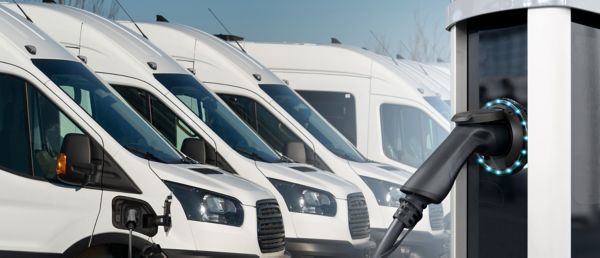
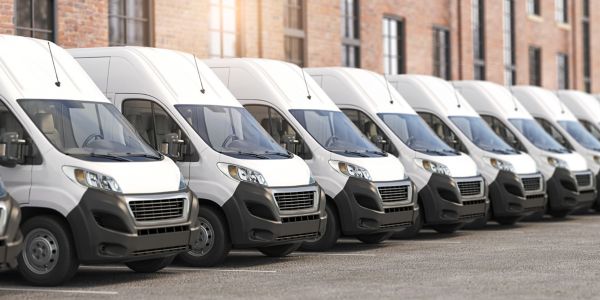
The Government has pledged action to make it easier for fleets to operate zero-emission vans weighing 3.5 to 4.25 tonnes. (Opens in new window) This was made in response to a consultation held between December - March 2024, on regulations related to annual vehicle testing, drivers' hours and tachographs, and speed limiter devices for zero-emission (ZE) vans.

Electric vans tend to be heavier compared to their petrol and diesel counterparts, due to the extra weight of the battery and other zero-emission technology. This extra weight may move the vehicle above the 3.5 tonne threshold, over which additional regulatory requirements for heavy goods vehicles apply.

Changes to driving licence entitlement for zero-emission vehicles came into effect from June 2025, making it easier to switch to electric vans. However there are additional regulations in other area's that are slowing the transiton to zero-emission vehicles.The consultation, ‘Zero emission vans: regulatory flexibility (Opens in new window)’, sought to reduce the barriers to electric van adoption by defining the regulations for vehicles that fall within the 3.5 to 4.25-tonne derogation.

MOT Testing changes:

  • The consultation proposed moving 3.5-4.35 tonne ZE vehicles into the class 7 MOT Testing system, where tests are carried out by the private sector rather than DVSA examiners at ATFs.

Tachograph rules for 4.25-tonne electric vans

  • The consulation sought views on proposals to alter drivers' hours and tachograph rules which apply to these vans. Currently they fall into scope of the assimilated drivers' hours rules and assimilated tachograph rules. However there is a national derogation covering electric, natural gas or liquified gas powered goods vehicles weighing up to 7.5 tonnes used to transport goods within a 62 mile radius of their base. 
  • Majority of the respondents were supportive to move them into the scope of the GB drivers' hours rules, within the greater simplicity, flexibility and uniformity with equivalent ICE vans all likely to be beneficial to those using these vans, supporting their uptake.

Speed Limiters:

Views on speed limiter rules were also investigated, as currently ZE vans between 3.4 - 4.25 tonnes are limited to 56mph by built in speed limiters.

  • Most respondents viewed speed limiters as a barrier to EV adoption and while the potential road safety effect of removing the speed limiter is understood, it could lead to a significant increase in speed travelled when driving on a motorway.
  • Altering the additional regulatory requirements that apply to these vans for some (but not all) areas of regulation would also create a small group of vehicles with niche requirements, potentially leading to confusion and undermining the intention for regulatory consistency at the 4.25-tonne threshold, the DfT reports. 
  • A further consultation could gather more information about the road safety effects of removing the speed limiter requirement and wether maintaining it while altering other rules would undermine the intention to make it easer to use these ZE vans.


Transport for London (TFL) has announced upcoming changes to the daily congestions charges that will take effect in 2026.

From January 2026, the daily congestion charge will increase:

  •  From £15 to £18 if paid on the day of travel or in advance
  • From £17.50 to £21 if paid within 3 days after travel

Changes to the Cleaner Vehicle Discount:

  • The existing 100% Cleaner Vehicle Discount ends on 25 December 2025, as originally planned (EV’s will no longer be exempt).
  • A new tiered system of discounts will be introduced from January 2026.

From 2 January 2026 there will be:

  • 25% discount on the daily charge for electric cars registered on Auto Pay
  • 50% discount on the daily charge for electric vans, HGVs, and quadricycles registered on Auto Pay

For more information about these changes, see here

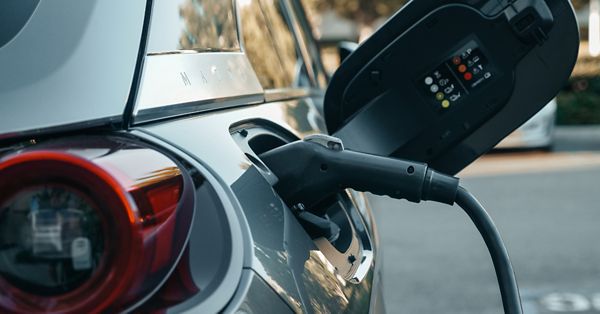
Two thirds of local authorities are now fully compliant with national electric vehicle (EV) public charging standards (Opens in new window).

Councils across Great Britain, reveal strong progress in the rollout and modernisation of local authority charge points. 154 out of 178 confimed that they currently operate active public chargers. Additionally, of the 143 councils who provided compliance data, 67% reported full complicance with public charging point regulations, up from 47% in 2024.

The proportion of councils reporting complete non-compliance has dropped sharply to 6% from more than a fifth (21%) previously, while those citing technical or funding challenges has fallen to 21%, down from 42% last year. 

The current public charge point regulations framework requires charge points to offer contactless payment, maintain 99% reliability for rapid units, provide a 24/7 helpline and support open data access via OCPI.

From november 2025, additional measures will be coming into effect including roaming interoperability and expanded open data sharing to make cross-network charging simpler for drivers.


Around two in five motorists oversetimate the drink drive limits, and as we approach the festive season, it is important that we urge drivers to avoid drinking if they are planning on driving. 

You could face serious penaltiesdownload (pdf(download (pdf( if you are caught over the legal drink-drive limits – you could be imprisoned, banned from driving, or fined if you are found guilty of drink driving. Additionally, as drinking impairs our senses, the results of doing this when driving could be fatal.

Some tips to avoid drinking and driving are to:

  • Select an alcohol-free or soft drink if you intend to drive, as with the rise of the sober movement there is plenty choice in alcohol-free beers, spirits and mocktails available.
  • Take public transport links and utilise taxis if possible
  • Arrange within a group of friends or colleagues to nominate a designated driver who will abstain from drinking when travelling.
  • Avoid drinking completely or avoid attending the event

It is also important to remember that alcohol stays in the system for up to 12 hours, so if you’re planning to drive home the next morning after a social function, you may need to consider another mode of transportation. 

The Government is also launching it's first drug-driving campaign in a decade (Opens in new window), which is focused on warning drivers of the devastating consequences of getting vehind the wheel while under the influence.

For more tips to avoid drink driving and information about penalties, see our drink driving penalties factsheet.download (pdf( (Opens in new window)download (pdf(

You can also check out our article on Road Safety (Opens in new window) , which provides guidance and practical advice to keep you safe on the road at all times.

Other related articles